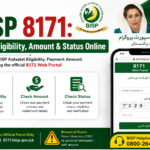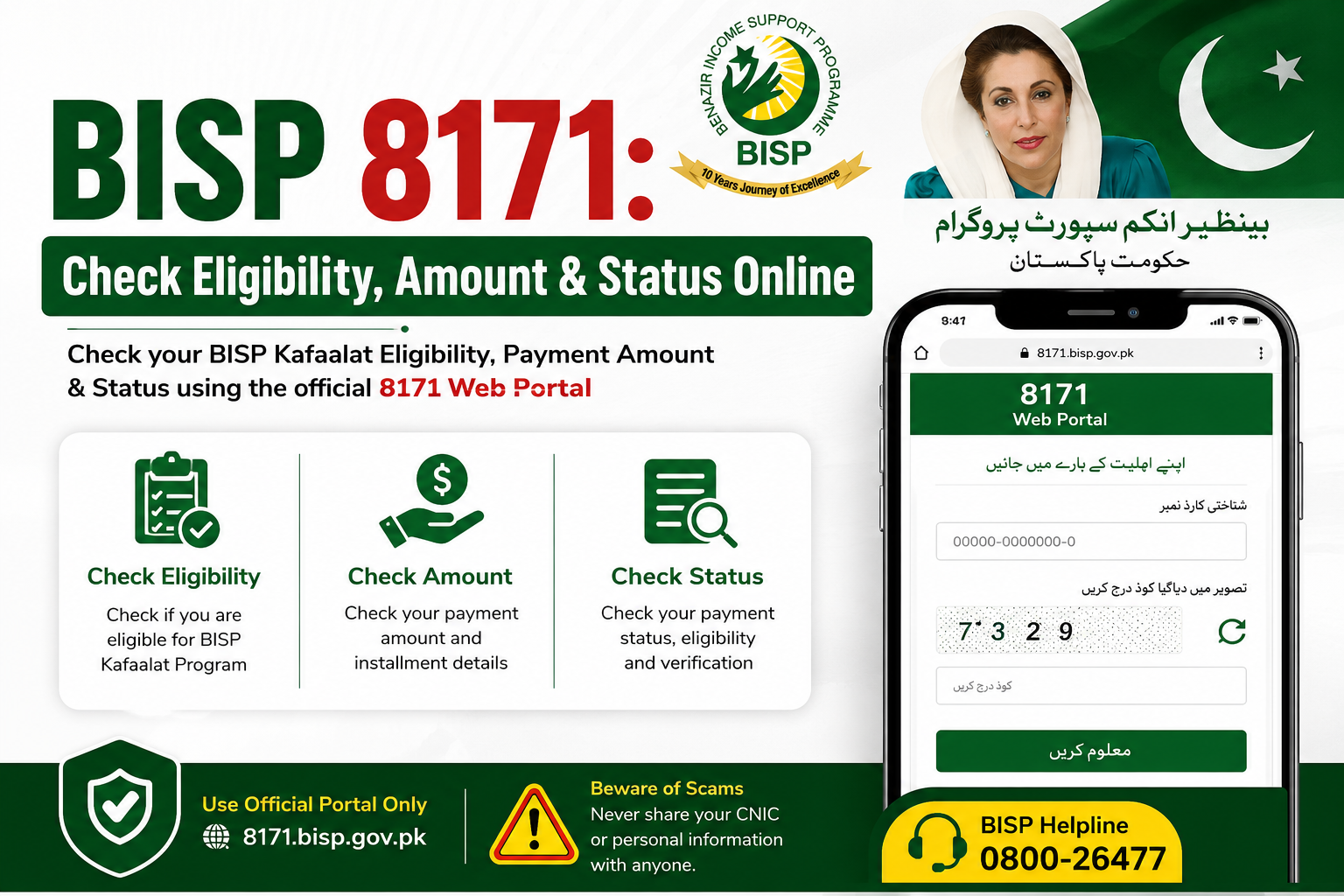
If you’ve ever tried to figure out whether your family qualifies for BISP support, you already know the frustration. Between confusing text messages, long lines at Tehsil offices, and conflicting information from neighbors, getting a straight answer used to feel nearly impossible. The 8171 system was built to fix exactly that problem.
This guide walks through what BISP 8171 actually is, how to check your eligibility and payment status, what the different results mean, and what to do if something looks wrong. Whether you’re checking your own status or helping a family member who isn’t comfortable with a smartphone, you’ll find the whole process broken down step by step.
Summary Box
What it is: BISP 8171 is the official CNIC-based verification system for the Benazir Income Support Programme, Pakistan’s largest cash-assistance program for low-income households.
How to check: Send your 13-digit CNIC to 8171 by SMS, or enter it on the official 8171 web portal.
Cost: Free, though standard network SMS charges may apply depending on your mobile carrier.
What you need: A valid, NADRA-registered CNIC and an active mobile number.
Result types: Eligible, Not Eligible, or Under Verification.
Confirmed vs. unconfirmed: Core eligibility criteria (valid CNIC, PMT score threshold, NSER registration) are confirmed and stable. Specific payment amounts and disbursement schedules change periodically and should always be verified on the official portal, since third-party sites often display outdated figures.
What Is BISP 8171?
BISP stands for the Benazir Income Support Programme, a federal cash-transfer initiative launched in 2008 to help low-income families, widows, orphans, and people with disabilities meet basic living costs. The “8171” part refers to the dedicated SMS short code and web portal used to check eligibility and payment status.
Think of 8171 less as a separate program and more as the front door to BISP. It doesn’t decide who qualifies on its own — it simply gives you a fast, official way to see where you stand.
It’s worth clearing up a common mix-up here: BISP and the Ehsaas Program are related but not identical. Ehsaas is a broader umbrella of social protection initiatives introduced later, while BISP is the older, foundational cash-support program. The 8171 system today primarily serves BISP verification, though some Ehsaas-linked services have used similar infrastructure in the past.
How Eligibility Is Determined
Eligibility isn’t based on a simple income statement. BISP uses something called the Proxy Means Test (PMT), a scoring model that estimates a household’s living standard using factors like:
- Household assets (livestock, vehicles, land)
- Housing conditions
- Number of dependents
- Utility consumption patterns
- Employment status of household members
Your household’s PMT score is calculated from data collected during the National Socio-Economic Registry (NSER) survey. If your score falls below the program’s poverty threshold, you’re classified as eligible. If your household information is outdated or was never properly surveyed, your status may show as “Under Verification” even if you’d otherwise qualify.
Generally not eligible: Government employees and households with a regular, documented income above the threshold are typically excluded, since the program is specifically designed for the most financially vulnerable families.
How to Check Your BISP 8171 Status
There are two official methods. Both are free to use, and neither requires visiting an office.
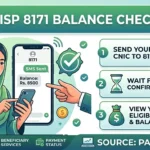
Method 1: SMS Check
- Open your phone’s messaging app.
- Type your 13-digit CNIC number with no dashes or spaces.
- Send it to 8171.
- Wait for a reply message showing your eligibility and payment status.
This works on all major Pakistani networks, including Jazz, Telenor, Ufone, and Zong.
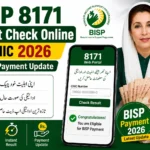
Method 2: Online Portal Check
- Visit the official BISP 8171 web portal.
- Enter your 13-digit CNIC number exactly as it appears on your card.
- Complete the CAPTCHA verification.
- Submit the form to view your results.
Quick tip: Always double-check that you’re entering all 13 digits with no spaces or hyphens. This is the single most common reason people get an “invalid CNIC” error.
Portal vs. SMS: Which Should You Use?
| Feature | Web Portal | SMS Method |
| Internet required | Yes | No |
| Cost | Free | Free (standard SMS rates may apply) |
| Speed | Instant | Usually within seconds to a few minutes |
| Best for | Users with smartphone/internet access | Users with basic phones or limited data |
| Detail level | More detailed status breakdown | Brief summary message |
Neither method is objectively “better” — the right one depends on what device and connectivity you have on hand. Many families end up using both, especially when a payment status needs double-checking.
What Your Status Result Means
| Status | What It Means | What To Do Next |
| Eligible | Your household qualifies, and payments are active or pending disbursement | Visit an authorized payment point with your CNIC and complete biometric verification |
| Not Eligible | Your household’s PMT score is above the threshold, or you weren’t found in the registry | Confirm your NSER survey was completed; reapply if it wasn’t |
| Under Verification | Your data is still being cross-checked against government databases | Wait and recheck periodically; no action needed unless it persists for weeks |
Advantages and Limitations
Advantages
- Completely free to check, with no office visit required
- Real-time connection to NADRA and NSER databases
- Two independent methods (SMS and web) in case one isn’t accessible
- Reduces opportunities for fraud or middlemen demanding payment for “help”
Limitations
- Requires an up-to-date NSER survey record — an outdated one can produce inaccurate results
- SMS delivery can occasionally lag on congested networks
- The portal is unavailable if you don’t have internet access, and rural connectivity isn’t always reliable
- A “Not Eligible” result doesn’t always come with a clear explanation of why
Expert Perspective
Anyone who has spent time following Pakistan’s social protection programs will tell you the same thing: the biggest source of confusion isn’t the eligibility criteria — it’s outdated household data. A family’s financial circumstances can change year to year, but if the NSER survey hasn’t been refreshed, the system is working off old information.
That’s why checking your status regularly matters, even if nothing in your household has changed. Program thresholds, survey cycles, and verification requirements are periodically updated, and a status that was accurate six months ago isn’t guaranteed to be accurate today.
Practical Advice
- Keep your CNIC details current with NADRA. Any mismatch between your CNIC record and your NSER data can cause verification delays.
- Recheck your status every few months, not just once. Under Verification statuses can take time to resolve.
- Never pay anyone to “speed up” your application. The 8171 system is entirely free, and any request for payment is a red flag.
- Use only official channels. The legitimate portal is operated under the government’s .gov.pk domain. Numerous lookalike websites exist that mimic the design of the official portal — treat any site asking for extra personal details beyond your CNIC with suspicion.
- If your status doesn’t update after a reasonable period, visit your nearest BISP Tehsil office in person with your CNIC.
Who Should Use This Guide
This guide is genuinely useful if you:
- Are checking BISP eligibility for the first time
- Are a registered beneficiary trying to confirm a payment status
- Are helping an elderly or less tech-savvy family member check their status
- Received a “Not Eligible” or “Under Verification” result and aren’t sure what it means
- Want to understand how the PMT scoring system actually works
Who Can Skip It
This guide isn’t necessary if you:
- Already have confirmed, active BISP payments and simply need this month’s disbursement date (check the portal directly instead)
- Are a government employee, since this category is generally excluded from BISP eligibility
- Are looking for information about a different Ehsaas sub-program not connected to 8171 verification
Frequently Asked Questions
Is checking BISP 8171 status really free? Yes. Both the SMS and online portal checks are free government services. Standard SMS charges from your mobile carrier may apply, but there’s no BISP-imposed fee.
Why does my status say “Under Verification”? This usually means your household data is still being cross-checked against NADRA and NSER records. It’s common after a recent survey update and typically resolves within a few weeks.
Can I check the status for a family member? Yes, as long as you have their correct 13-digit CNIC number, you can check on their behalf using either method.
What if the portal says my CNIC is invalid? Double-check that you’ve entered all 13 digits with no dashes or spaces. If the error persists, your CNIC record may need updating with NADRA.
How often is NSER survey data updated? The NSER undergoes periodic dynamic surveys, but the exact schedule can vary by region. If your circumstances have changed significantly, you can request an update at your nearest BISP office.
Are third-party websites offering “8171 checks” official? No. The only official channel is the government-operated 8171 portal. Third-party sites may display outdated or inaccurate information, and some exist purely to collect personal data. Always verify you’re on an official .gov.pk domain before entering your CNIC.
Conclusion
The 8171 system exists to take the guesswork — and the gatekeeping — out of BISP eligibility. Whether you use the SMS shortcut or the web portal, the process is designed to give you a straight answer using nothing more than your CNIC.
The most important habit to build isn’t a one-time check. It’s rechecking periodically, keeping your NADRA and NSER information current, and sticking to official channels only. Do that, and you’ll always know exactly where your household stands — without relying on rumors, agents, or outdated advice.
This guide is independently written for informational purposes and is not officially affiliated with the Government of Pakistan or the Benazir Income Support Programme. For the most current eligibility criteria and payment figures, always verify directly through the official 8171 portal.